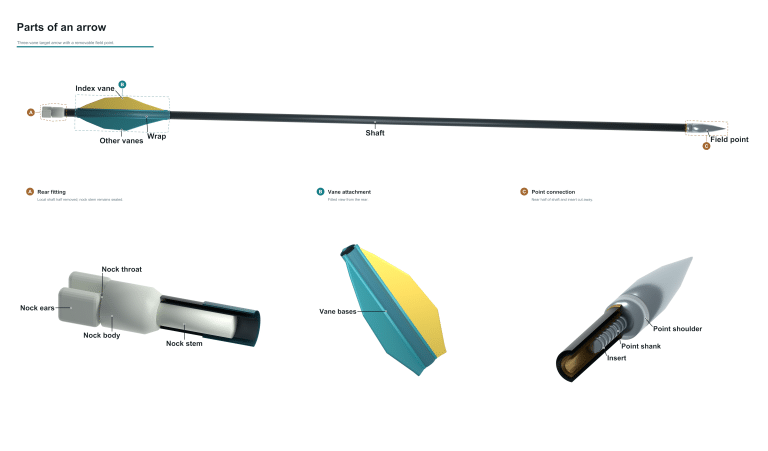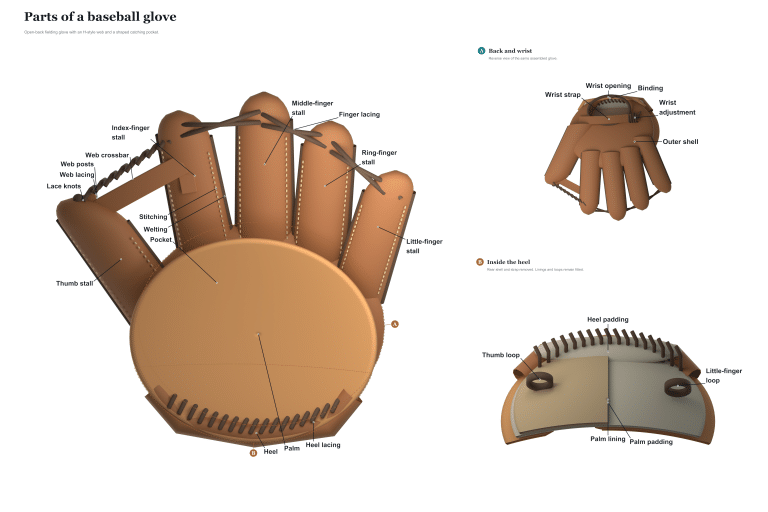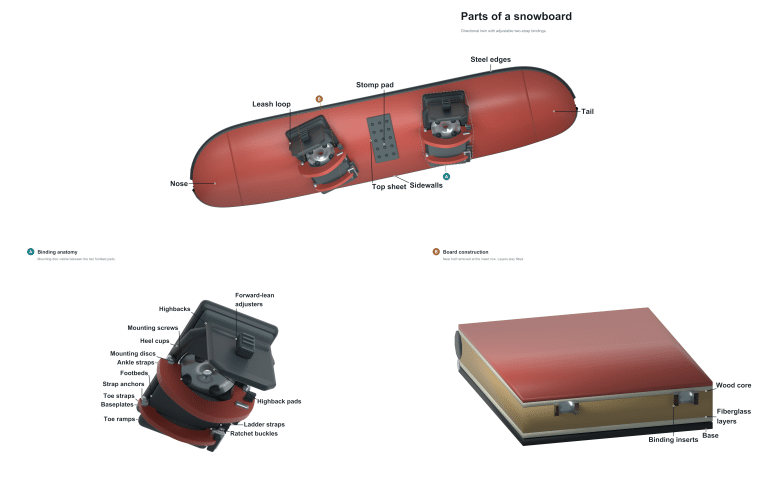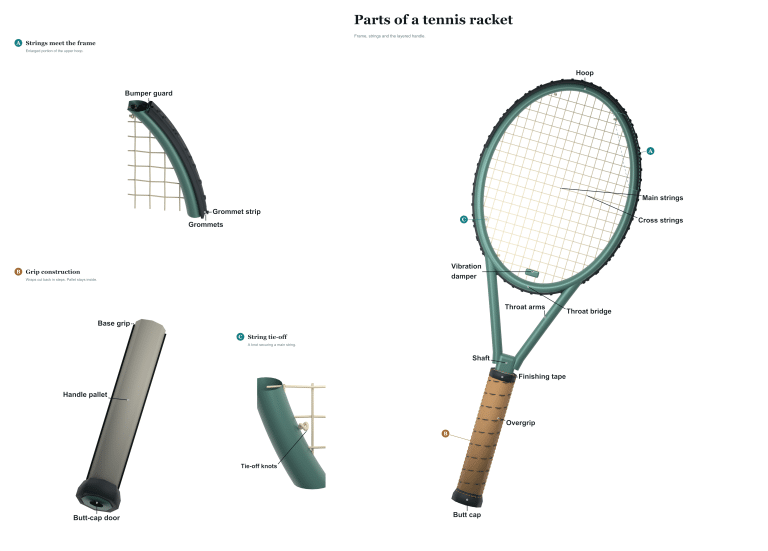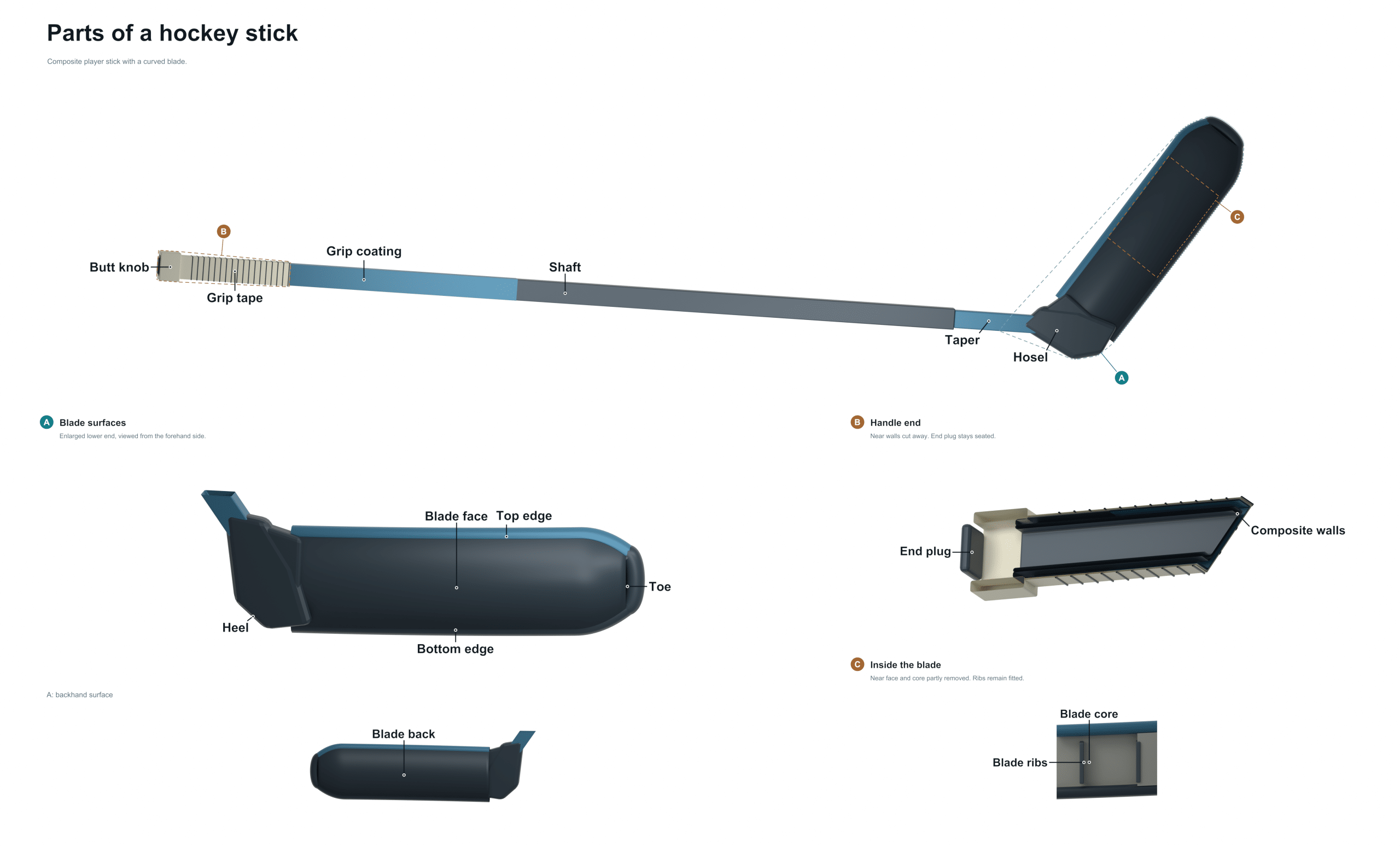
A hockey stick is an extension of the player. It take physical effort and translates it into controlling the puck like a hockey stick. To understand more about how design affects performance, one needs to understand the parts of stick. Below is a visual guide to the stick that has all the parts labelled. You will notice from the picture how the sections of the stick join together. Each of the sections below are described, and their role in your play is explained.
This is where you typically come into contact with the bottom part of the stick shaft (called the butt end). To ensure a solid grip, many players will cover this area with some sort of grip material or even just tape. This is also where manufacturers identifies their sticks by placing logos and moddern model numbers. It’s important to have good control at the butt end as it anchors the top hand for maximum power on your shots.
Parts of a Hockey Stick
Grip
Near the top of the stick lies the grip which is the part of the shaft that your hands will rest on. To increase friction most players puts some sort of synthetic grip or tape around this area. The amount of tape you use depends on what works best for you and whether you want to feel the puck. If a proper grip isn’t used it will cause the stick to rotate in your hand when performing sudden stick handling movements.
Shaft
This refers to the long part connecting the blade to the handle called the shaft. This is also the lever used to take shots. How stiff is the shaft? The stiffer the shaft, the more energy it can absorbs and release on the shot. How is a shaft designed? A good design will distribute the weight evenly, allowing for better balance and maneuverability. What’s the shaft made of? Look for shafts made of wood or some type of composite material such as carbon fiber. Knowing about the flex rating allow you to select a shaft that best suits your shooting style.
Another essential aspect of structural integrity is the hosel; that’s the curved connecting point between the shaft and blade. It tapers down to gradually decrease in thickness from the shaft to the larger blade for a continuous unbroken join. Not only does it help to dampen shock but lessen the chance the joint can break. To resist the twist force of slap shots the hosel is frequently strengthened on composite sticks. A smoother hosel allow energy to transfer into the stick more efficient. This adds to the feel of the whole stick.
Blade
Passing and shooting are done with the bottom portion (blade) of the stick. How well this blade controls and feels the puck depends on the material from which the blade is made. Curves of the blade can be modified to allow easier puck lifting. This part of the stick comes into direct contact with the puck; therefore, blade quality will affect accuracy.
Usually, the front of the blade (the side of the blade that makes contact with the puck) has some slight curve in it called the face. How much curve there is on the face dictates how far the puck travels off the blade. The more flat the face, the better the puck can be passed. Often you will see the face taped so the puck holds on better. A clean face means consistent results as dirt can change where the puck sits.
Blade Shaft: This is the long, rigid section of your hockey stick. It’s generally made from fiberglass or graphite.
Heel
Stability when stickhandling comes from the heel of the blade which is the back part that’s closest to the shaft. The heel will help to grip the puck as you cradle it. It can also help block shots, as the thick part of the blade is effective at stopping incoming pucks. Because the heel can wear down it’s important to check for any deep cuts for safety purposes.
Toe
Pick up the puck. The end of the blade furthest from you is called the “toe”. It’s used when making fast, short passes or to pick up the puck off the ice. Being able to flick your puck precisely requires a flexible toe. Dragging the toe across the ice may cause wear and tear. You would of wanted it to be in good shape for agility.
Each of these elements works together to make a well-balanced hockey stick. The blade gives you precision, the shaft provides the power, and the grip and butt end keep it all under control. And the hosel ties it all into place. Take a look at how straight your blade is, and the condition of your grip when something isn’t feeling right. Taking care of every aspect will keep your stick going longer.