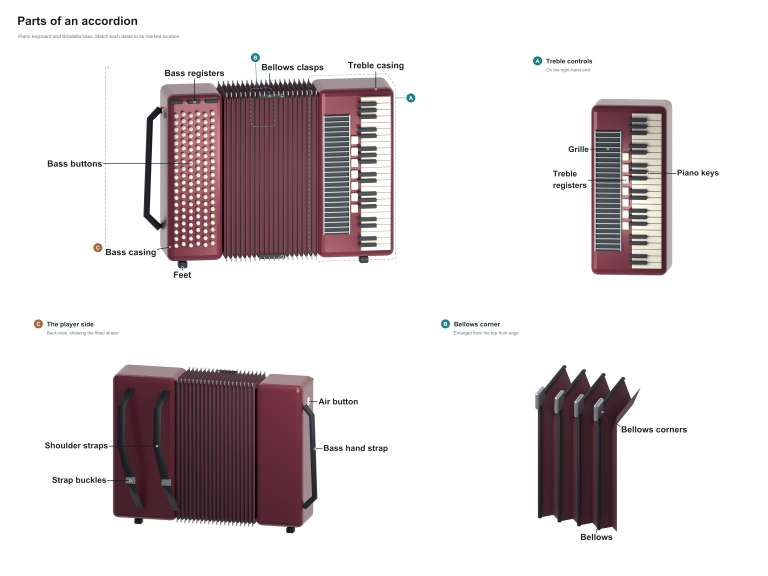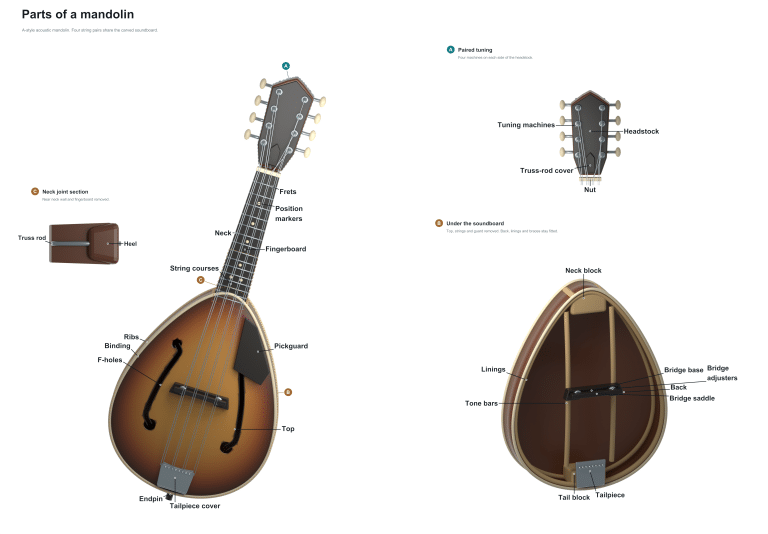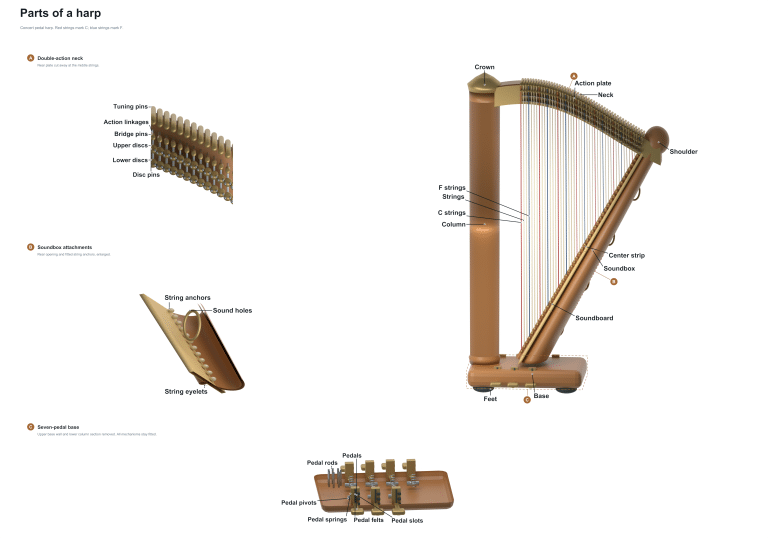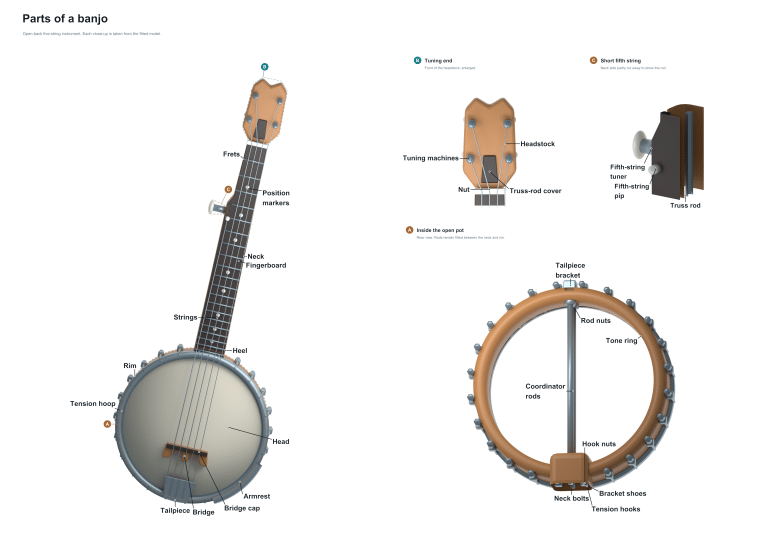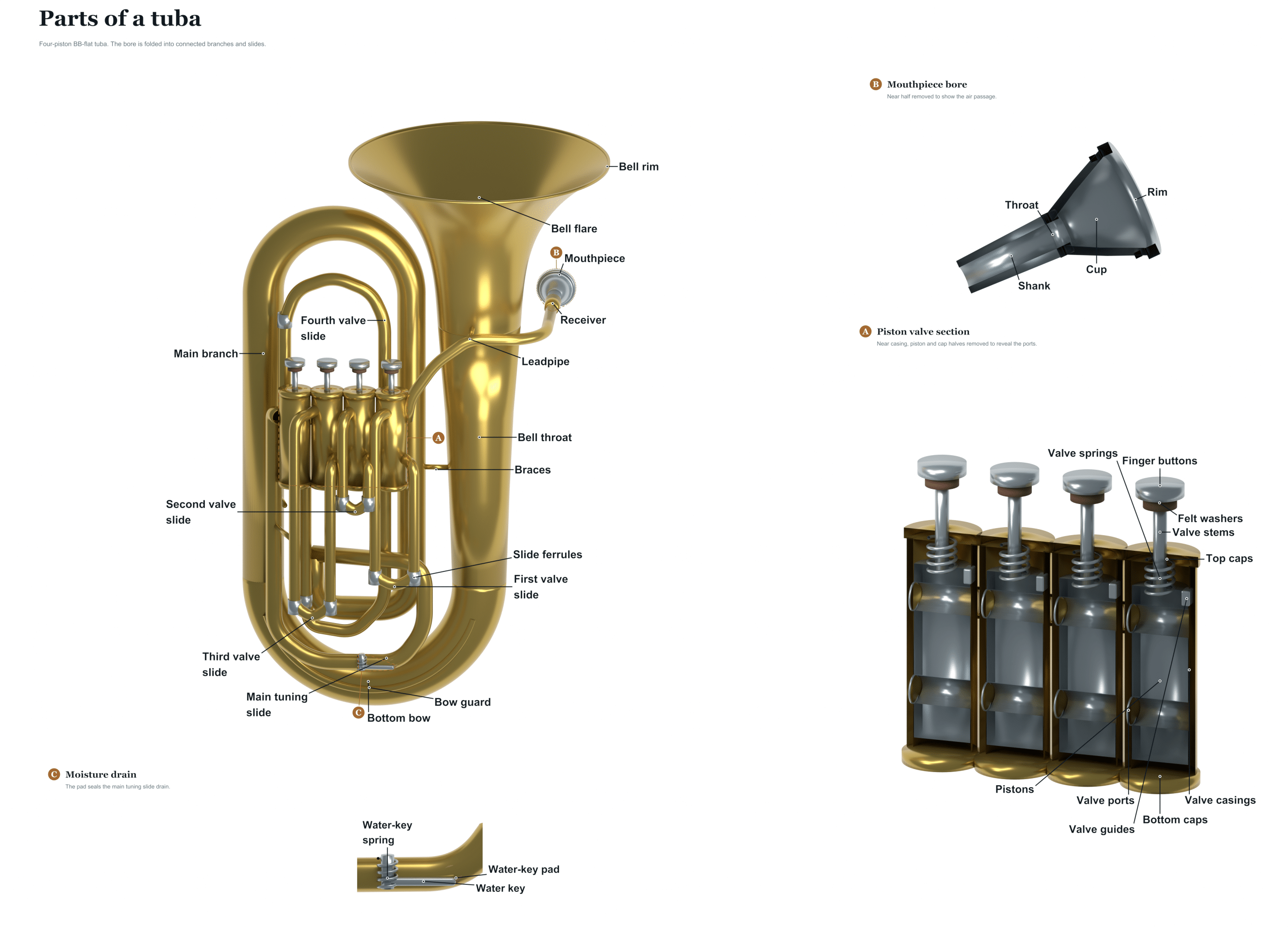
Brass instruments are large and require attention. They is also complex instruments that require some understanding of how they work if they are to be played well. The tuba is no exception. As the lowest member of the brass family, it supports the orchestra’s music with low bass lines.
In this marked diagram, you will notice how each section contributes to the production of sound and how it is controlled. Get to know these sections to better care for your tuba.
Parts of the Tuba
Mouthpiece
What about the mouthpiece? This is what you put in your mouth to begin playing. It’s the little piece of metal that vibrates when you play your lips over it. These vibrations travels through the instrument to make the sound. You’ll notice that you can take out the mouthpiece to clean it or even replace it with another that has a new shape and alters the tone.
Air leaks are bad because they weaken the sound. A good seal between the lead pipe and the mouthpiece is essential.
Leadpipe
The leadpipe is connected to the mouthpiece. It is a narrow, curved tube that leads into the body of the instrument. This tube pass air from your lips with little resistance and into the rest of the instrument. Since it is generally smooth, air flows freely through the tube, which helps create a clear tone. Buildup here will dull the response of the instrument, so give this area a good clean using a flexible snake brush.
On the top of the instrument are valve buttons which you use your fingers to press to alter the pitch. When each button is pressed it operates a piston below that diverts the airflow along further tubes until it reaches the note. Pressing straight down and keeping your finger relaxed allows for quiet and smooth operation of the valves.
Valve Casings
The Cylindrical containers where the moving pistons live are called Valve Casings. These need to be lined up properly so air flows through them efficienty. They’re also designed to let the piston move up and down without much friction. To keep the pistons moving freely and prevent corrosion, you can take the valve casing off and clean out the insides and put a bit of valve oil on them.
Valve Slides
When a valve is depressed it extends an air path through smaller tubes called Valve Slides which are attached to the valve casing. The longer the tube, the lower the pitch, which lets you play notes that would not be possible on the open tubing. The slides should be oiled occasionally to ensure smooth operation as you tune them by adjusting their length. Sometimes they get stuck, and gentle rocking from side to side or using slide grease will free them up.
The tubes connecting from the valves to the remainder of the bore of the instrument is called the branches. If you think about it, they combine all the various air passages together leading up to the bell where the sound comes out. It’s worth keeping in mind that any dirt or other matter that accumulates here can block the airflow and make your notes less clear.
Main Tuning Slide
How to pull and push the main tuning slide. This is a bigger set of slides that are pushed in or pulled out to alter the overall pitch. If your tuba is playing sharp or flat, you can adjust this slide to bring the intonation back in line for all the notes. To make it go smoothly you need to use slide grease. When you push the slide in, it raises the pitch and when you pull it out, it lowers the pitch as it lengthens the instrument.
Water Key
Finally, there’s the little door at the base of the tubing that is the water key or spit valve. This is where any moisture that builds up inside the instrument while playing will come out. Always open this key into a tissue before and after playing, otherwise liquid can block the airway. If this mechanism becomes blocked by anything then it won’t drain properly and could of impact on how your instrument sounds.
Bottom Bow
At the foot of the instrument there is a large, curved section of tubing known as the bottom bow. This section supports the tuba’s weight and helps distribute its mass evenly when the instrument is set down or picked up. If you drop your tuba, the bottom bow can be prone to denting and should be checked frequently for any damage.
Bell
The large open end of the tuba from which the sound emerges is called the bell. This is a resonator that not only amplifies the sound waves produced by you blowing through the instrument but also contributes to the tone colour. The size and shape of the bell are important factors here. Ensure this remains clear and free of blockage for the full projection of the sound.
Bell Flare
A bell flare refers to how the tube gradually increases in size towards the opening of the bell. A good flare directs sound waves outwards and blends them together. It’s important to have a smooth flare which will produce a consistent tone. If there are any dents here they could compromise the structural integrity of the instrument.
Collectively all these elements combine to produce the strong tone we associate with the tuba. It is worth checking the relevant components are clean and well-lubricated if you experience any difficulties like sticky valves or a stuffy sound. Knowing what each component does will also aid troubleshooting and keep your instrument in top playing order if maintained regularly.