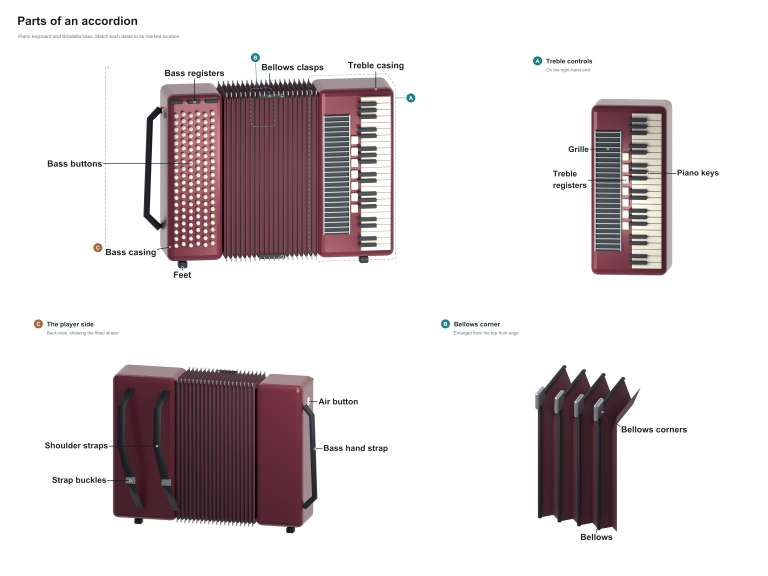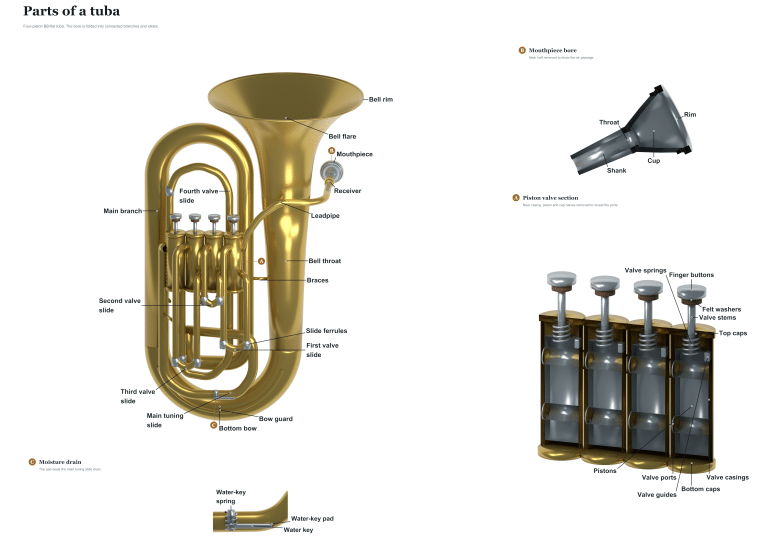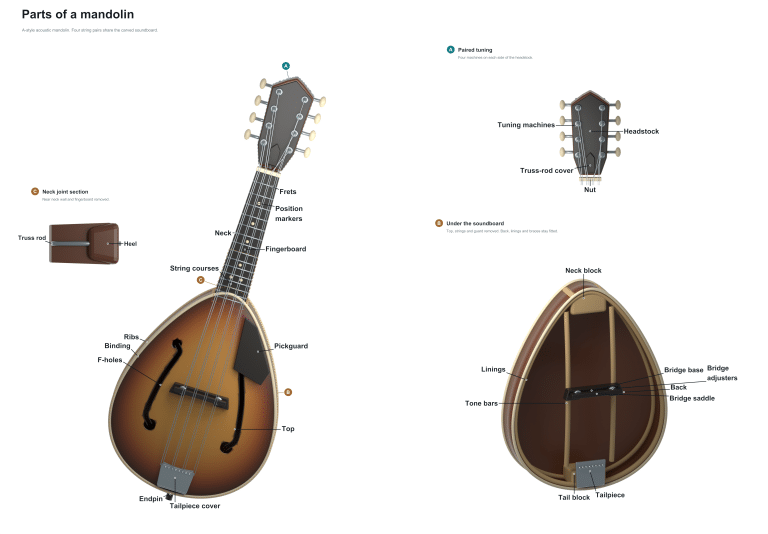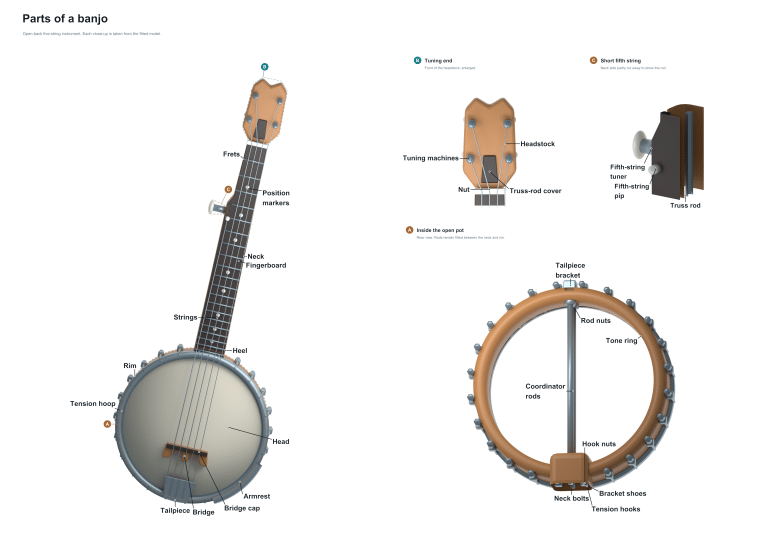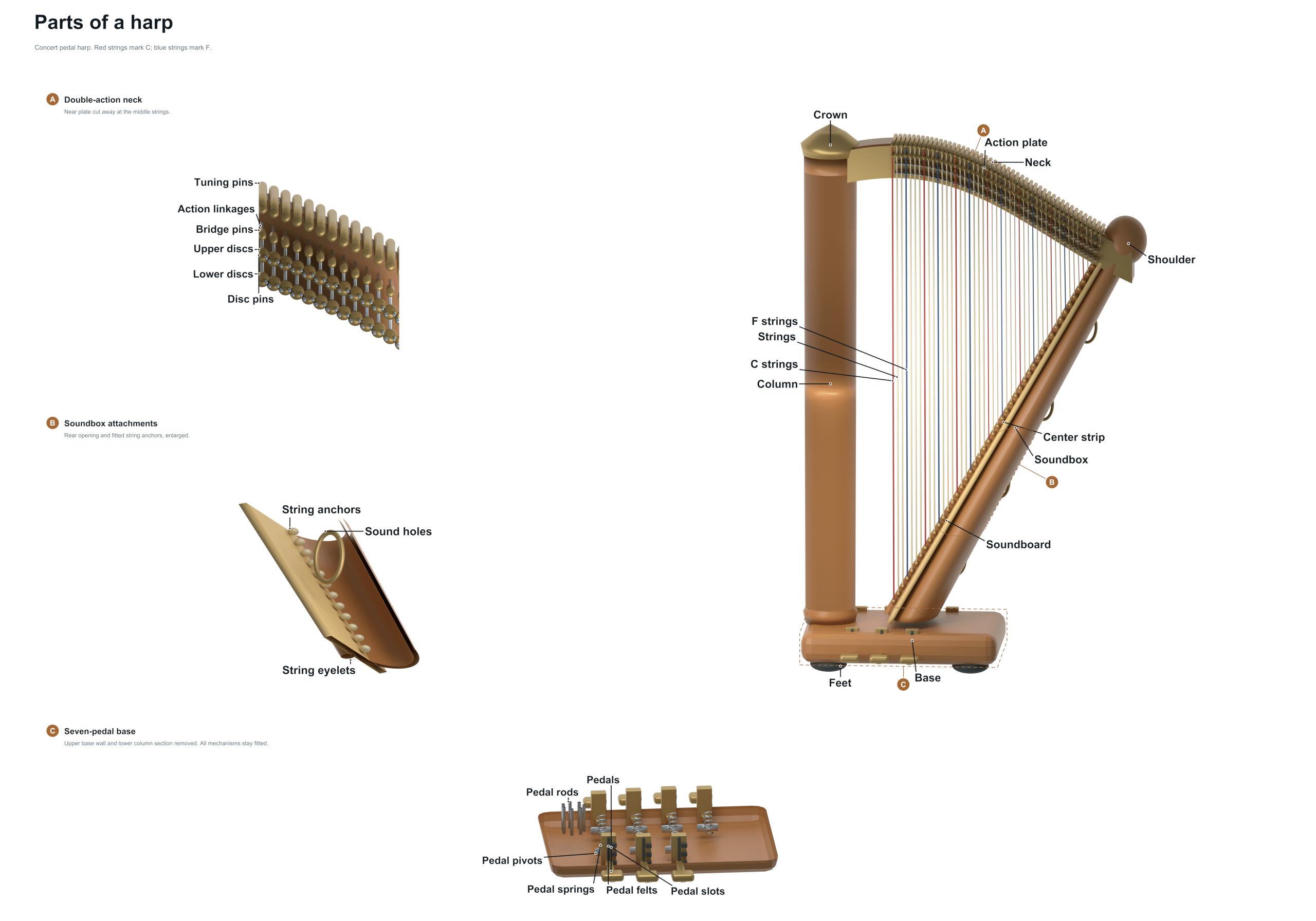
As an acoustic instrument, the harp is a thing of wonder. Its unique sound comes from blending the mechanics of a harp with the ring of wood and string tension. Ranging from the bright to the percussive; from the soft to the ethereal, it is widely used in ensembles, solo pieces and within an orchestra. To play, care for and enjoy the music created by this amazing instrument, knowing how a harp work is essential.
As you read on, refer to the diagram above and find where every part is positioned. Structurally the harp make sense. Strings is supported by strong frames whilst the mechanical components help pitch adjustment.
The Parts of a Harp
Strings
Above the strings at their upper end is the neck of the harp frame. This is the top curved part of the frame that holds the tuning pins and provides support for the strings. As you might imagine, it must be strong enough to hold the weight of all the strings pulling down on it. There is more than a thousand pounds of string tension across the whole instrument! Not only does the neck need to be strong but its shape adds to the visual beauty of the harp, with detailed carvings found on many professional instrument. But if the neck is cracked or a joint becomes loose, it requires immediate professional attention.
Column
The next part we’ll look at is what extends upwards from the neck. This is the column. It’s the central beam that supports the whole structure running from the top curve down to the base. It provide the main strength to the harp. If there was no solid column, the harp couldn’t hold the strings tight enough to give a clear tone. Generally speaking, the column is crafted from good-quality wood that has been seasoned so it won’t warp. The column join straight on to the base below and the neck above, creating the right-angled shape that gives the harp its name.
Strings are the thin gut strands or wire that you pluck to make the music. They stretch from the tuning pins on the top of the neck and run down across the soundboard to the base. Each one is tuned to a certain note giving the full chromatic scale of notes available to the player. It is the tension of these strings that produce the sound by vibrating the air inside the frame.
It is important to take good care of the strings. Over time they will fray and also lose their tone. Regularly clean them with a dry cloth. This will help stop dust building up which in turn can dampen the vibration.
Soundboard
The soundboard is hidden behind the strings. It’s a curved, thin piece of wood that serves as the instrument’s membrane. As you pluck a string, the vibration pass through the bridge and into the soundboard, where it greatly magnifies the sound. Spruce is a popular material for soundboards because of its resonant properties. But it can be sensitive to humidity changes, so protecting the soundboard from warping or even cracking is best achieved by storing the harp in a stable environment.
Base
The base This part sits horizontally at the bottom of the structure. It holds up the harp’s foot and contains the complex pedal mechanism, which links to the column and stabilizes it. Sometimes, stands or feet is used to hold the harp in place on the floor or stage. The base needs to be strong enough to support the tension of the strings and the leveraged forces created by the pedals. It also serves a purpose for evenly distributing the weight of the instrument and protecting the lower strings from being accidental damaged.
Pedals
The pedals attach to the base. There are seven levers which can be used to change the pitch of the strings mechanically. Pressing them down engages a series of levers and discs within the neck. These reduces the effective string length, which increases the pitch. The pedals are named after notes from C, B allowing the harpist to perform in any key. They also mean that key changes can take place quickly during performances without having to stop and re-tune manually. Keeping the pedals well maintained will ensure that they operate smoothly and don’t stick or become slow in response.
Tuning pins
Lastly, the little metal pegs at the top of the neck are called the tuning pins. They hold the end of each string and allow us to adjust the tension exactly where we want it. Turning one of the tuning pins will increase or decrease the tension of that string. This increases or lowers the pitch of the note produced by that string. The tuning pins need to be tight enough to keep them secure but not too tight otherwise you’ll strip the pin out or damage the wood. A tuning hammer is normally used to get them just right. It’s important to have the string wrapped neatly around the tuning pin so it remains stable when tuned.
The strings resonate, the soundboard amplifies, the pins hold tension, the pedals provide musical flexibility and all these components combine to create a delicate balance of resonance and force. To keep your harp sounding good, it’s worth checking the state of the strings and whether they are still sitting tight on the tuning pins. Make sure the soundboard is undamaged and that the pedal mechanism works freely too. Knowing what makes up your harp will help you understand how to look after it more effectively and appreciate its full sonic potential.