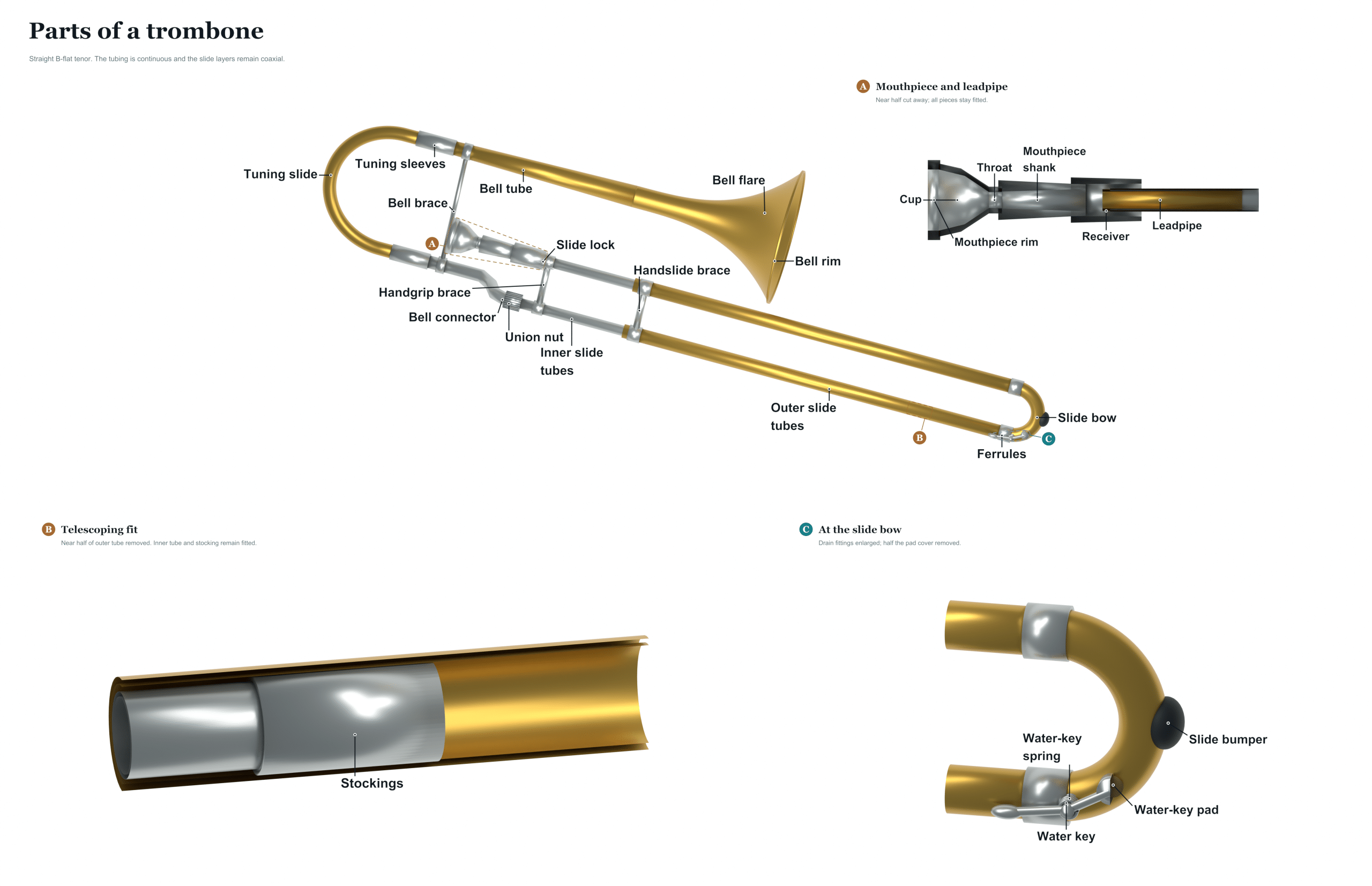
As a versatile member of the brass family with many different qualities, the trombone has a deep warm sound and a unique mechanism for playing called a ‘slide’. From the classical orchestra to jazz groups or even contemporary pop acts, the trombone are an essential part of music-making scene. One main feature of the trombone is that it’s not like other brass instruments with valves but instead is capable of continualy changing pitch as it requires. This gives players greater expressive possibilities when performing on their chosen instrument.
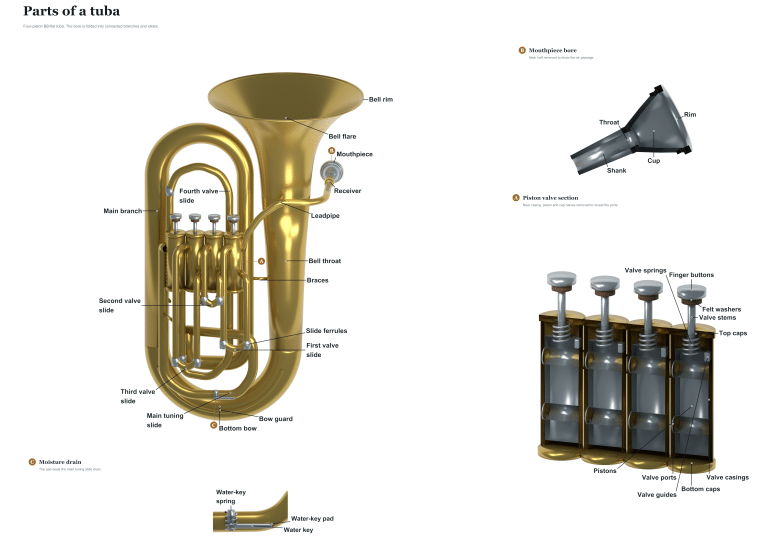
Right here at the end is where you put your lips for your first step into the world of trombone. This is the mouthpiece; it’s the small metal cup that channels your breath into the instrument. What this does is direct the airflow from your mouth into the instrument through the mouthpiece. The shape your lips form when you play comes into contact with the mouthpiece, so the design can have a huge impact on both your comfort and your sound.
Parts of the Trombone
Mouthpiece
Inside the mouthpiece, you’ll notice there is a section called the ‘cup’. This give your note depth and resonance. As a general rule of thumb, the deeper the cup is, the more resonant and darker your tone will be. On the other hand, a shallower cup result in a brighter sound. Around the outside of the cup is what is called the rim. This smooth section of the mouthpiece sits on your lips. If it fits well enough then you should of feel comfortable using it without any pain after extended periods of playing. The next section is called the shank. This is a tapering tube that attaches the mouthpiece to the rest of the horn. The shank keep the mouthpiece in place and allows the air to travel up and into the leadpipe.
Leadpipe
The air moves down from here through the leadpipe into the first section of tubing that affects the intonation and response of the instrument. How well the horn ‘speaks’ depend on the taper and bore size of this lead pipe. Next, we come to the section called the bell section that includes the flared end of the horn. It is here where sound is projected outwards from the horn into the surrounding room. Sound waves generated by the player travel down the horn until they hit the bell, at which point they become like a loudspeaker for acoustic waves coming from the instrument. The bell is the widest part of the tubing with a gradual widening as you move towards the bell flare. Here, the sound waves can spread and scatter effectiveley, giving them their characteristic shape in the tone we ultimately hear.
Bell
Next inwards from the bell comes the tuning slide. It’s a U-shaped tube of tubing which gives you the way to tune the instrument up or down by altering its overall length. By carefully pushing or pulling on the slide, you should be able to make your trombone play in tune if it sounds flat or sharp. The lock ring holds the slide firmly in position when you have achieved the right pitch so it doesn’t slip during playing. The spit valve or water key is located close by. This little lever will open a drain hole to release condensation that accumulates within the tubing. Regularly clearing water is vital for maintaining clear airflow and preventing corrosion.
The slide assembly is the central component of the trombone and what makes it possible to play different notes. The outer slide or outer tube is attached to the leadpipe and the bell and does not move during playing. The inner slide or tube slide inside this outer tube, being pulled forward or pushed backwards as required to alter the note played. Slide oil help the two tubes to slide smoothly over one another and they need to be kept well lubricated if they are not to seize up.
Slide bow
The slide bow gives extra strength to the moving components. This is the U-shape bridge between the two outer slide tubes. It gives the trombonist structural integrity and support. You’ll notice above the brace there is a reinforcing strip called the slide brace. This strengthens the joint where the slide meets the bow. Your right-hand rests on the hand brace comfortabley giving you control and leverage when you slide. The cork barrel sits near the mouthpiece receiver at the top of the slide assembly. Your left hand grips this part as it takes the brunt of the trombone’s weight. It also offers a secure hold and some amount of vibration reduction.
Each element work together for a smooth playing experience. If you’re experiencing any resistance from the slide or if you find that the pitch isn’t stable, take a moment to inspect the lubrication of both the inside and outside of the slides, as well as the tuning slide lock and the water key. Knowing about each piece makes troubleshooting small problems easier and will allow you to take care of your instrument. As you come to appreciate the engineering that goes into making this instrument, you’ll have more confidence while playing and take better care of your trombone.