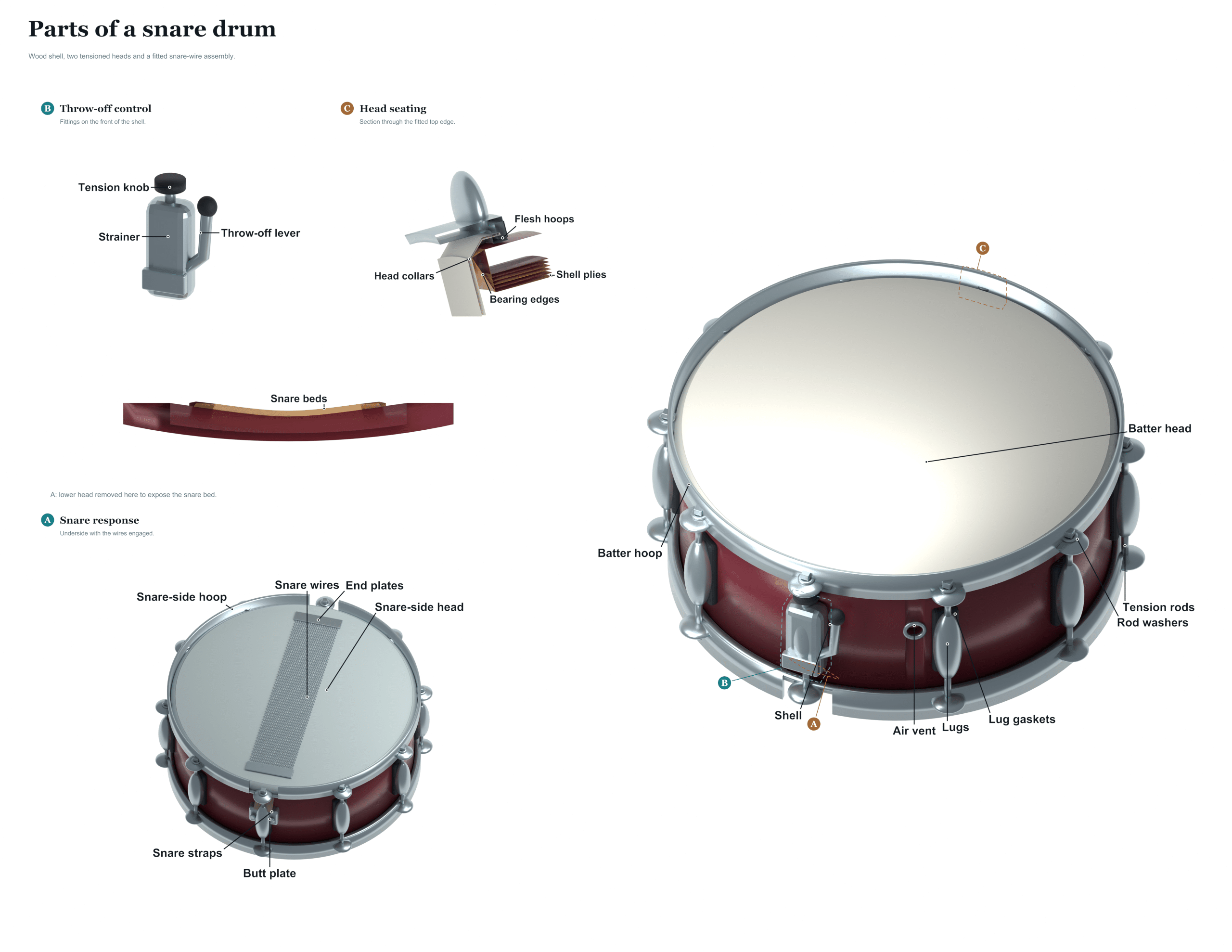
In most types of music, the snare drum propel the rhythm with a sharp backbeat. When struck, this drum’s unique crackling sound are created through a mechanical arrangement which allow wires to be hit by the striking head and rattle across the skin of the drum. Knowing the mechanics of the various parts enables you to look after the drum and adjust its sound to match your playing style. Use the labeled diagram above to locate each part as we discuss its function and role.
On the top of the drum is where the batter head is located. This is the drumhead that you play with either your drum sticks or hands. Since this head take the full force of your hits, it needs to be fairly thick but still produce a crisp attack. To hold in place you’ll see some tension rods and a hoop. These can all be adjusted for tension and pitch. Over time, the batter head can dent and wrinkle. Change the batter head if you want an even sound.
Parts of a Snare Drum
Hoop
A hoop is just a metal ring located beneath your tension rods and atop the batter head. It’s there to even out the clamping pressure as it applies force against the drum head at its edge. When you tighten the hardware, you’ll be pushing down on the hoop to get the head to set properly into place. Bent or dented hoops can lead to uneven tension, this causes an unstable or fuzzy tone and also creates issues with tuning.
Batter Head
Located at the bottom of the drum, this is often a clearer, thinner head compared to the batter head. This head provide the overall pitch and sustain of the drum, vibrating sympathetically with the batter head. The characteristic rattling sound come from the snare wires pressing directly onto the underside of this head. Keep this head clean and clear of debris. Any imperfection will distort the vibration and affect the clarity of the snare buzz.
A snare wire is a set of synthetic (or metal) strands that are held taut and parallel to the resonant head at the base of the drum. As you hit the batter head, the throw-off pushes the wires down onto the resonant head which then vibrates and in turn makes the snares also vibrate. This is what gives the snare drum its characteristic buzzing/sharp quality. By simply rotating the throw off you’re able to control how responsive the snares are and make sure they aren’t rattling between beats if you’re not playing them.
Shell
A metal rod and lever assembly is mounted onto the side of the drum shell. This is called the throw-off. The throw-off is the switch used to turn the snare wires on or off. When the throw-off is engaged, the snare wires is pulled tight against the resonant head, and when the throw-off is disengaged, they release so the drum sounds like a tom. You may choose to use the fine-tuning knob on the throw-off. This lets you tune the tension of the wires. This way, you can control how loudly they respond to softly played notes.
Snare Wires
On the other side of the drum sits the second bracket for the snare wires, this one’s called the butt plate. When you have your throw-off engaged, the butt plate anchors the snare assembly to keep the snare wires taut and running parallel with each other. Because the snare wires is always under tension, this piece needs to be strong enough not to bend or slip out of place. The consequence of a loose butt plate is that the snare wires will begin to sag, giving you a muted or inconsistent buzz.
Tension Rod
A tension rod is simply a threaded screw that goes up into a lug and presses downward onto the hoop. This applies pressure to the hoop, stretching your drumheads until they reach the correct pitch. There is usually ten or twelve of these tension rods equally spaced around the shell. Be sure to tighten them in a star pattern so as not to damage the shell or warp the head when tuning the drum.
Lug
The tension rod passes through a bracket (lug) that is attached to the shell. This bracket is known as a lug. The lug serves as a bearing for the tension rod so it can put down force onto the hoop yet stay snugly fastened to the drum body. Lugs need to be accurately made and sturdy to avoid any wobble resulting in an unstable tune. If you see your lugs are becoming cross threaded or starting to rust, inspect them closely. This could result in unevenly tensioned heads and make the drum hard to fine tune.
A drum’s body, which is also referred to as its shell, is typically manufactured from acrylic, metal or wood in a cylindrical shape. This forms the structure of the drum that encases everything inside and holds the drum together. The type of shell used will greatly affect the sound quality, with a wooden shell sounding warmer and a metal one sounding brighter. Look out for any dents or cracks in the shell as this could be harmful to the drum’s strength and therefore its ability to maintain the required tension and give you a clean sound.
On most shells, toward the edge of the bearing surface, there is a little channel or hole called the vent. The purpose of this is to let air out of the shell when the batter strikes and the head comes down onto it. That gives some regulation of air flow into and out of the drum which decreases the undesirable chuffing or sounds that happen in closed drums. Some drums has adjustable vents. You can adjust the air pressure in the drum to get a more open or tight sound as you prefer.
Snare Bed
Underneath where the snare wires travel over the drum is what we call the snare bed. This is basically a recessed area cut out in the interior edge of the shell to allow the snare wires to rest flush on the resonant head without actualy touching the shell. If there were no bed for them they would touch the wood, resulting in unwanted choking or buzzing of the sound. That’s why it’s so important for getting that responsive clean snare tone without interfering with the vibration of the head.
Knowing what all the pieces are will help you troubleshoot problems with unwanted noise or a lack of tuning stability. Snare not sounding right? Make sure the snare wires aren’t loose, the heads aren’t worn out, and the hoop is properly positioned. Keeping all of this in good shape means your drum will sound its best and remain dependable in each practice or performance session.