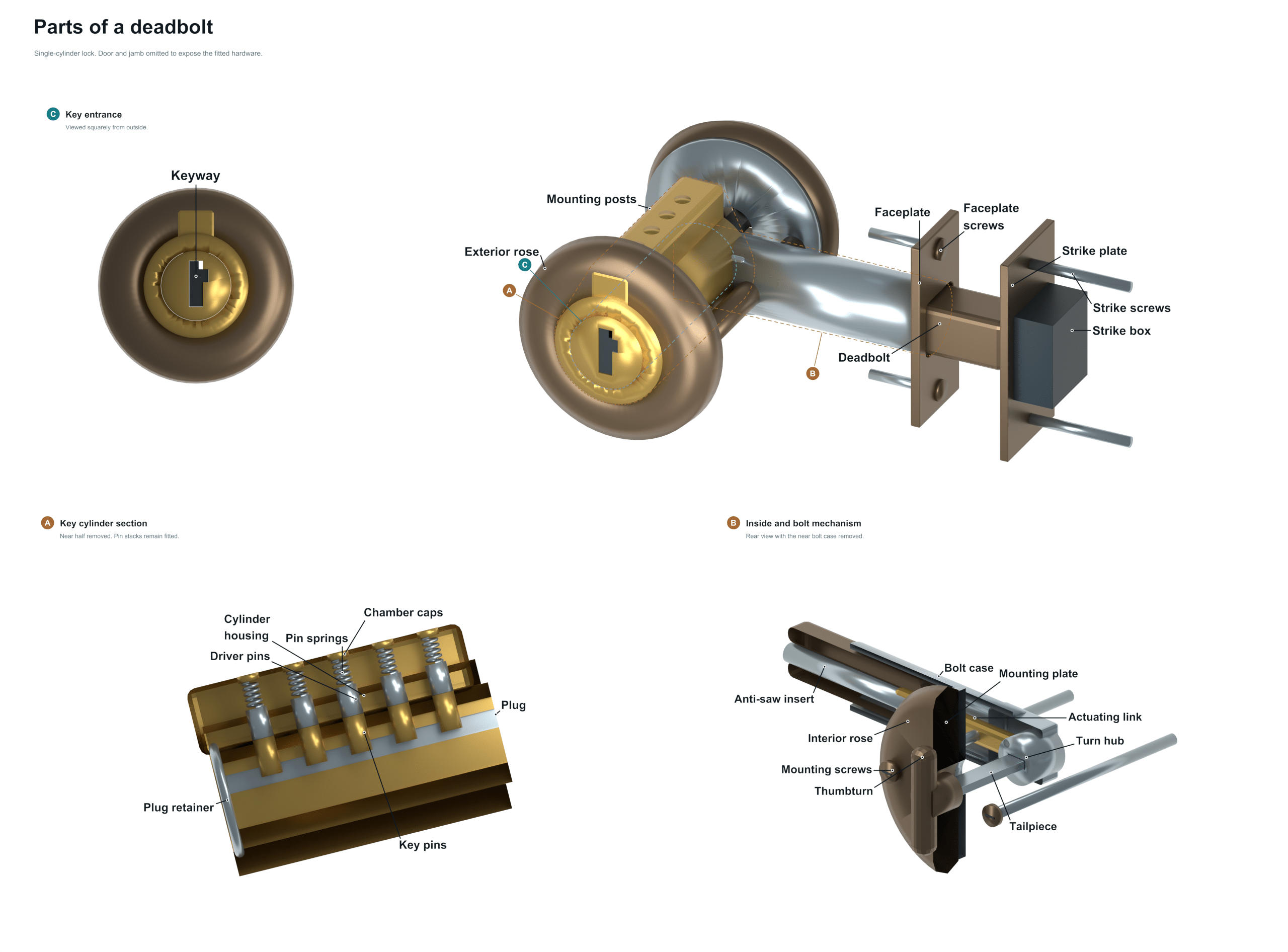
Any entry door should have a deadbolt, an essential lock to help secure doors from forced entry. A good deadbolt is stronger than a basic spring latch and can provides a strong barrier against intruders. Knowing how a deadbolt works will help you keep your doors intact and repair small issues with the mechanism. The parts of the deadbolt are shown in the drawing above.
As you learn more about their role in the door’s locking system, locate these components in the drawing. On the outside of the door, there’s a round piece of metal (the cylinder) that you put your key into. Inside the cylinder are pins which line up with the cuts in your key and allow the lock to turn. This can become worn/damaged, causing issues when trying to insert/turn the key. Keep it clean and free of debris to help it work reliable over time.
Parts of a Deadbolt Lock
Keyway
Inside the cylinder, there’s a narrow slot called the keyway that the key inserts into. The shape of the keyway determines exactly which key will open the lock. Dirt and metal shavings can accumulate in the keyway, preventing the key from turning. Cleaning out the keyway with a soft brush will help ensure the key enters easy each time, preventing sticking.
Faceplate
The faceplate: this is the flat piece of metal mounted to the door, on the edge. It covers the hole through which the bolt inserts into the door frame. Its purpose is to protect the inner workings of the lock from moisture and dust. It also reinforces the edge of the door, making it more difficult for an intruder to pry it open. So make sure the screws securing it are tightened to keep everything structurally sound.
When locked, a deadbolt has a solid metal bar (the bolt) extending from the door into the frame called the deadbolt bolt. This is typically manufactured from hardened steel so it can’t be bent or cut. When you turn the thumbturn or key, the bolt slides in/out of its housing. Any resistance will prevent the bolt from fully engaging with the strike plate, so you want it to slide freely and not bind.
Screws
Screws are little fasteners used to attach all the pieces of your lockset. These screws attach the cylinder, interior plate and faceplate to the door. If they become loose it will cause the lock to not perform well. You may notice it feels off kilter and wobbly. Check them occasionally with a screwdriver to make sure they is tight.
Interior Plate
Inside the door is the interior plate (sometimes called the backplate). This plate is connected to the internal mechanism and gives you something to mount the thumbturn to. The thumbturn is what you use to unlock/lock your door from inside the room. Tighten the screws on this plate if the thumbturn seems loose. That’s usually an instant fix.
Thumbturn
What’s this? This is the thumbturn, the knob or lever on the inside plate that you rotate with your hand and gives you easy, no-key-needed access from within the house. From there, the thumbturn is connected directly to the tailpiece, which converts your rotation into the bolt’s straight motion. Make sure to extend the bolt all the way. Ensure it snaps back in place properly every time.
Cylinder Plug
When the proper key is placed into the cylinder, the rotating cylinder plug engages the locking pins in the lock body. The plug is the moving component that makes contact with the locking pins within the lock body. A plug that begins to feel gritty and/or stiff will not function correct and the whole lock won’t work properly. Applying a dry graphite lubricant to the plug area will help return the plug to its smooth operation.
Housing
This is the primary component of the lock. It is the main housing that goes into the door and holds the internal parts like springs and gears. To operate the bolt. The housing also safeguards these delicate parts from the elements as well as potential damage. If a good housing is used and installed correctly it will keep your locks in alignment with the door frame and secure for years.
Tailpiece
A piece of metal called the tailpiece connects the outer cylinder to the mechanism inside the housing. Turning the key causes it to push against the bolt to move it in and out. Sometimes the tailpiece can become bent or out of place inside the mechanism making the lock difficult to operate. When installing, make sure to check that it’s aligned so it will operate smoothy without being forced too much.
Strike Plate
A strike plate is a metal plate installed on the door frame where the deadbolt sits. When the door is shut, the bolt slides into a hole in the strike plate. The purpose of the strike plate is to reinforce the wood surrounding the lock and keep it from splitting as the bolt is pushed against it. If the bolt doesn’t align exactly with the hole in the frame, you can move the strike plate around until it fits.
When all of these pieces are in place, they work together to create a secure locking system. External access is controlled by the outside cylinder and key way. Internal access is controlled by the thumb turn and interior plate. Motion from the cylinder moves through the tail piece into the housing that pushes the deadbolt into the strike plate.
Before assuming your deadbolt has an issue, make sure it’s aligned correctly with the strike plate. Often, common operational problems can be solved by tightening any loose screws and making sure the tail piece is straight. Taking care of these pieces on a regular basis will ensure your door remains easy to operate and secure for years.