A horse’s foot is a complex structure which facilitate balance, movement and traction while protecting the softer interior of the foot from impact as a shock absorber. Understanding its anatomy reveals how it functions and allows you to keep tabs on the animal’s performance and health.
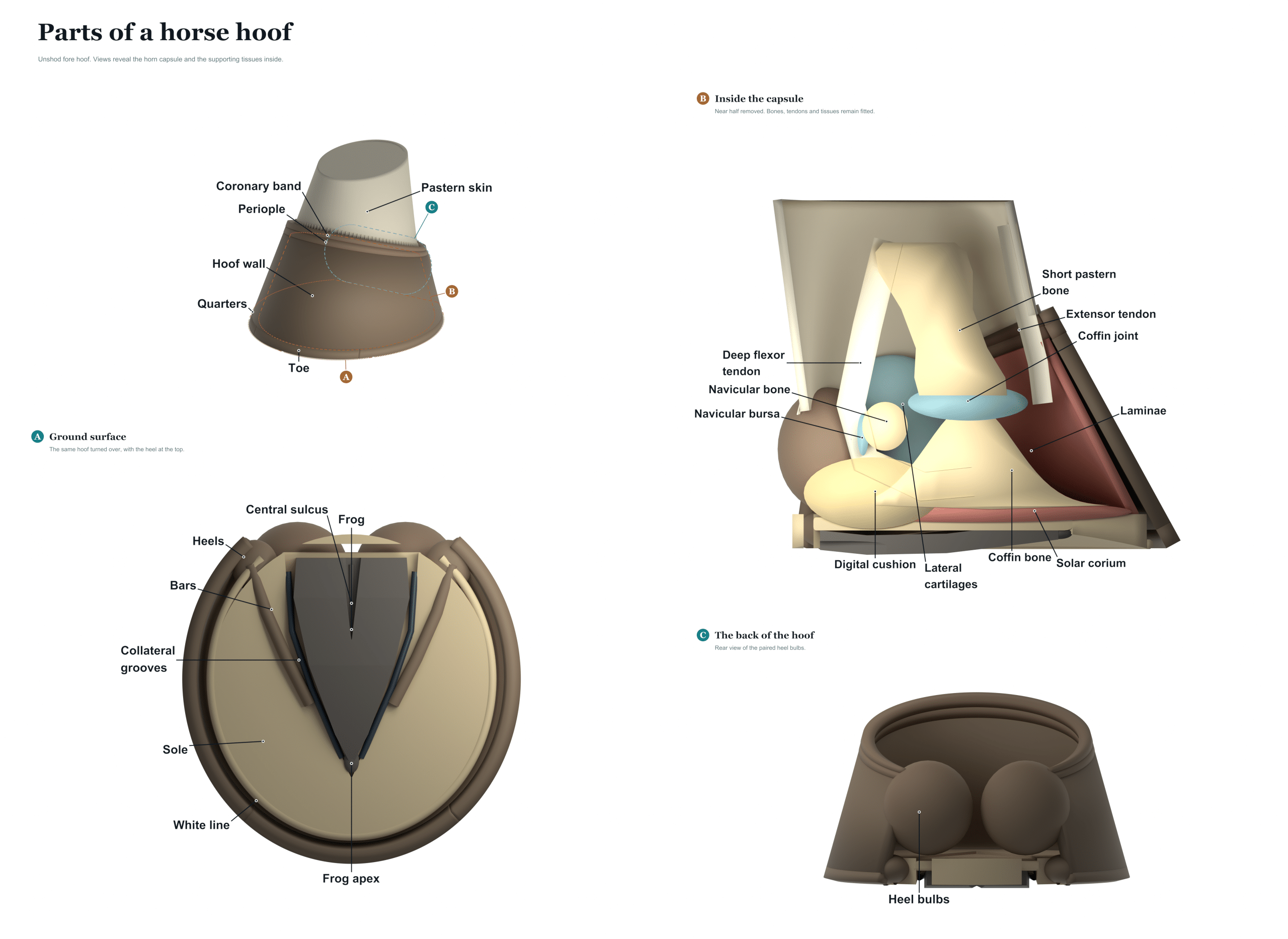
When you look down on your horse’s foot, the part where his leg and hoof meet is called the coronary band. Similar to how our nails grow from the bed, it produce new hoof growth. Any injury to the coronary band will result in cracks in the newly produced wall. Make sure to clean that area well. After riding, be certain to check the band for any debris.
Parts of a Horse’s Foot
Hoof wall
Surrounding the outside of the foot, the hoof wall are composed of hard keratin that grows in an outward direction from the coronary band. The hoof wall act as a protective shell that supports the animal. It also protect the inner parts of the hoof. Look for a smooth surface with no cracks when evaluating wall quality. A good diet will strengthens this protective barrier.
Quarter
Next we have the quarter, the side section between the heel and the toe. This is where it give a little and absorbs shock as you move around. To help support your weight it’s typically a bit thicker than. As you observe it moving around you’ll notice that there is some flex in this area helping spread energy. If the quarters becomes uneven they can lead to lameness, so regular trimming helps prevent this.
Toe
The toe is the front portion of the hoof wall, which carries a lot of weight when the horse pushes off the ground. When galloping, this section wear down quickly, requiring special attention when trimmed. If the toe is cut too long, tendons is strained and naturaly breakover is hindered. Check for bruising by feeling for heat in the toe.
These is the back part of the hoof, known as the heels. When a horse is moving they should of the last part of the hoof to land on the ground; this gives them grip and absorbs shock. The heels needs to be able to take the horses’ weight and therefore be firm and full when healthy. Gently squeeze your fingers over the heels. If they are tender, it could indicate an abscess or other issue. Keeping the heels well cared for will keep good balance and posture.
Heel
The heel bulbs are fatty cushions located above the heels. Located on the bottom of the horse’s leg, near the joint to protect the bones and tendons of the hoof. They should be firm but give a little when touched. The bulbs should feel soft yet resilient; if they seem swollen, it can mean injury or overworking. Mud on the bulb can cause skin infection so keep them clean.
These are curving outwards based off the hoof wall, into the inner hoof. They help support the heel region and prevent the frog from wearing away. As a horse ages, or if its hooves has been trimmed, these bars will show more. Look to see if they’re overgrown or cracked. If properly trimmed, the bars still act as supports for the heel.
Frog
Underneath the hoof there is a V-shaped structure called the frog. The purpose of it is for traction and pumping blood back uphill as it walks. With each step this tissue flexes and contracts to help circulation. To avoid infection you want to maintain a healthy frog by keeping it clean. When the frog is healthy, it’s pinkish in color and firm, indicating proper blood flow.
Cleft
The middle of the frog is called the cleft. It’s a groove that funnels away water and other debris, leaving the hoof dry. The groove allow the frog to expand properly when bearing weight. Examine the cleft for any lodged sticks or stones. This prevents bacteria buildup and moisture accumulation in this area.
Sole
The curved underside of a horse’s hoof is called the sole. The sole protects the interior foot, including the bones and sensitive layers. To help protect against punctures, a good sole will be somewhat concave. Tapping lightly on it should have some ring as well. Any unseen void in your horse’s foot would of been felt that way. Make sure the sole isn’t worn down too much, and inspect regularly.
Notice how the bottom part of the hoof (the sole) connects to the inside of the hoof wall? That’s the white line. If that becomes damaged, bacteria can get into there because it’s not as dense as the surrounding wall. Check it regularly to ensure it isn’t discolored or separated. When cared for properly, no debris gets trapped there, keeping the hoof intact.
These elements combine to give your horse their footing. Checking them regularly and taking care of any issues help create a strong, working hoof. If something is off, like texture, shape, or sensitivity, see someone who knows what they are doing.