When riding or driving your horse, one of the most important pieces of tack is the bridle. It consist of a mouthpiece, metal rings, and leather straps that work together to communicate between you and the horse. Knowing what all these parts do will help you know if you have something that fits well enough for both you and the horse’s comfort and response. Understanding how the pieces fit together is key to understanding its purpose.
The following is an explanation of what each part does, and how it connects with other parts of the bridle.
Parts of a Bridle
Headpiece
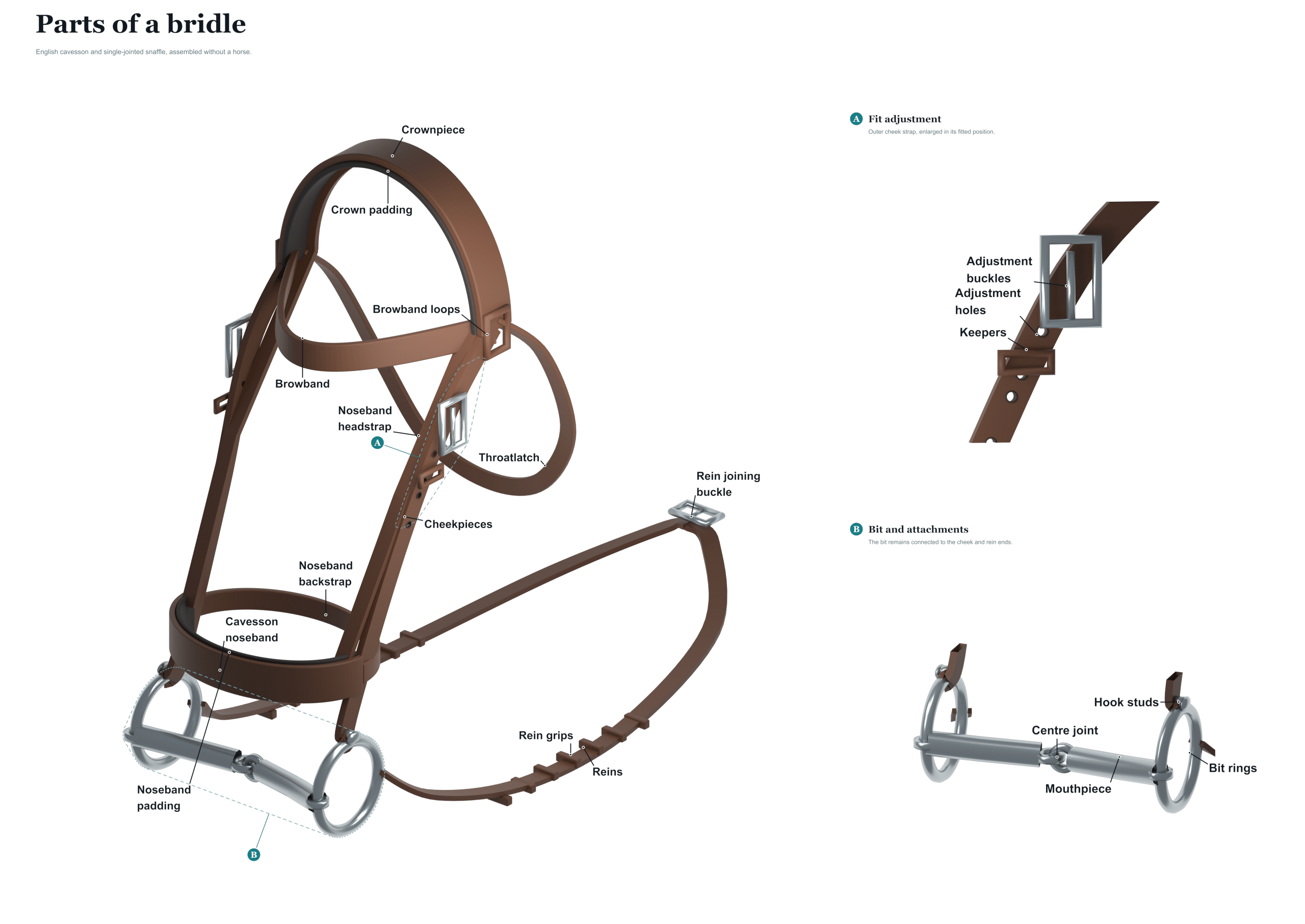
The headpiece runs from side to side just above the horse’s poll (the part of its head between the ears) and is the main strap that holds all the pieces of the bridle together and provides the primary anchor point for the whole thing. If there was no solid headpiece, none of the other straps would remains in position. Make sure it doesn’t slip too far forward but also isn’t pressing into your horse’s ears.
Browband
The browband prevents the headpiece from slipping back on the horses’ forehead. It secures the cheekpieces into place relative to the horse’s ears and stabilizes the bridle as a whole. An ideal browband should rest slightly beneath the mane line without obstructing the horse’s field of view. The browband is frequently the first thing to adjust if the bridle becomes too loose or moves about while being ridden.
One of the straps on the bridle, the one that loops around the horse’s jaw just below the cheekbone and in front of the throat, is called the throatlatch. The function of this strap is to keep the bridle off the horse’s ears. If the bridle should slide up onto the horse’s ears, not only could he panic, but he would also become blind. So that strap is very important from a safety standpoint. The throatlatch can be adjusted to be comfortabley yet snug enough so the horse can move his jaw normally as he drinks or eats.
Bit
Cheekpieces are the vertical straps that run from the bit rings at each side of the horse’s face up to the throatlatch and headpiece. These keep the bit in the correct position in the horse’s mouth. You will know if your cheek pieces need adjusting as it will affect the way your bit sits. Balance them out on each side. Make sure they are untwisted and smooth with no rough edges for your horse’s sensitive cheek skin.
Nosebands It wraps below the bone on the nose of the horse. Its job is not only to hold the bridle together but also to stop the horse opening its mouth excessively and closing it over its jaw line. The type of noseband used depends on the discipline, but it needs to sit properly so it does not constrict the horse’s airway. Generally, if there are two fingers between the horse’s nose and the nose band then this is fine.
In equine lingo, the bit is what actualy sits inside the horse’s mouth. It is the metal part that sits in the bars (where there are no teeth). This is where all the action happens. This is where your aids comes through. It is what the horse feels when you ask them with your hands. Bit size, material, and even shape matter a lot when it comes to bits and how they work for your horse.
Bit Ring
At either end of the bit you’ll see the oval or round hole referred to as the bit ring. This is where the cheekpieces connect to the reins. They give a little flex to the connection point. Depending on the style ring this can change the stability and leverage of the bit in the horse’s mouth. Some rings are one piece and some have a jointed section so the cheekpieces can swivel separately.
Reins
Reins are long straps that run from your hands through the bit rings to let you direct and slow the horse. It’s a line of communication between you and your horse where the pressure applied in your hand is felt by the horse at the bit. A steady and gentle contact is held on the reins as you guide the horse steadily. Depending on individual preference and riding style, there are various types of materials and lengths for reins.
The buckle on the reins is what holds the reins together so they can be made shorter or longer depending off the height of the horse and the length of your arms. If the buckle gets too big or small it affects your contact and control. You can adjust the length of the reins using the buckle to suit your arm length and the horse’s height. Make sure to look at your buckle regularly to make sure it’s not worn down or broken, because if this happens you will lose contact on the reins.
Together they form an effective means of communicating with the horse. If something isn’t quite right with the bridle, such as the balance, or if the horse doesn’t seem happy wearing it, check it all again. See if everything is fitting and functioning properly. The idea is that the bridle sits comfortably on the horse without being too tight or restricting their movement in any way, and responds appropriately to your aids. This keeps them and you comfortable and safe.