
If you’ve ever ridden a bike, then you know that when you pedal, it absorbs some of the impact from bumps in the road, but also turns your leg power into moving forward. That’s pretty good engineering. And knowing how it works will help you fix problems more easy.
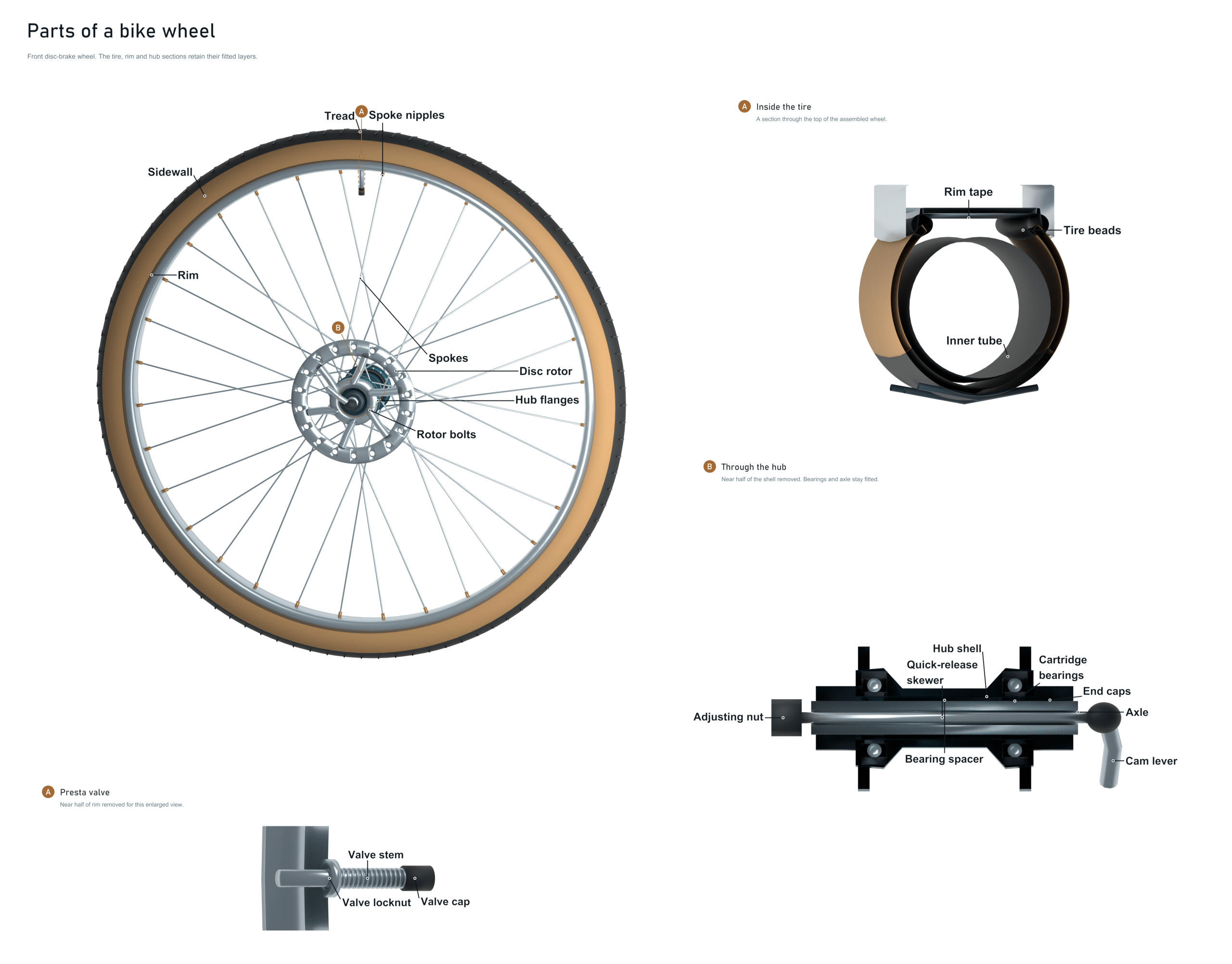
The diagram above shows what is inside. Use this visual as a cheat sheet for where things are on a bike and how they work so you ride safely and efficient.
Parts of a Bike Wheel
Tire
Tire: This is the outside edge which contacts the pavement. Cornering, braking and acceleration is all affected by the tire. Tire tread shape and the type of rubber used will impact how a bike handles on dry versus wet surfaces. Inspect the tire periodically for any rips, debris lodged in it, or if its worn down too much.
Tread
Tread is the pattern on the surface of the tire. For road bikes it’s usually a smooth tread so the tires can roll as easy as possible with low rolling resistance. Mountain bike treads is typically knobby and aggressive for digging into loose surfaces. Tread design will affect comfort and traction. You don’t want to slip, and matching tread type to the surface you ride will keep that from happening.
Sidewall
The sidewall is the vertical part of the tire that connects the tread to the bead, which latches onto the rim. Sidewalls contain data such as manufacturer info, size, and maximum pressure ratings for the tire. Since sidewalls is not reliable to patch, a crack or puncture in this section typically requires replacing the tire.
Rim
A rim is the ring of metal or other material that forms the outer circle of the wheel around which the tire is mounted. The rim supports both the bike and the rider’s weight and gives a round shape to the wheel. Forces are transferred between the hub and the tire through spokes anchored in the rim. With a proper rim, the wheel will spin true without any wobbling.
Hub
The spokes are thin wires running from the hub out to the rim of the wheel. Under tension they hold the wheel in place and add rigidity to it. The spokes act like a web that supports the wheel by evenly distributing the weight. If a spoke goes slack or breaks, the wheel could become out of true and will need to be adjusted.
Spoke Nipple
At the end of every spoke is a little metal fitting called the spoke nipple. The spoke nipple screws into the threaded end of the spoke and holds it in place on the rim. To true the wheel or adjust the spoke tension, tighten or loosen the nipple. It’s important to check the nipples regularly for corrosion or cracks as part of your regular maintenance.
Inner Tube
This is the port where the air goes into your tire or inner tube. You use it to inflate. This is called the valve stem, which protrudes through a hole in the rim. There are two kinds: one called Presta and one called Schrader, each requiring its own type of pump head. Make sure the valve cap is on tightly so no moisture or dirt enters the valve mechanism.
Inside of the tire is a rubber bladder called an inner tube that fits snugly on the rim. If a sharp object penetrates the tire, it punctures the tube, causing a flat. Long trips will require bringing a patch kit and a spare tube with you.
Rim Tape
On the interior surface of the rim you will find a piece of tape called rim tape. This protects the spoke holes from tearing through the inner tube. A tear in the tape (or movement out of position) can allow the tube to rub on the rim resulting in slow leaks. Always check the rim tape before putting a tube in the wheel.
Axle
The hub is what you would think it is. That’s the part of the wheel where the axle fits, and which contains the bearings that let it turn round and round. Often the gears (freewheel/cassette) is also housed in the rear hub. If the hub is shot, then the wheel doesn’t roll well, and will make a grinding noise.
The axle is the solid rod that runs through the center of the hub and attaches the wheel to the bicycle frame or fork dropouts. This is where the radial load of a bike plus rider sits. It’s held securely by thru-axles or quick-release skewers.
Inside the hub are small, precision balls or rollers called bearings. It is responsible for reducing friction between the hub shell and the axle. The bearings enable smooth spinning of the wheel, which requires little effort. Play or grittiness in the wheel usually shows that worn bearings requires service.
Together all those components form a dependable wheel. The axle and hub secure it. The spokes and rim holds up under the load. The tire with its inner tube gives us grip and a cushioned ride.
Anytime something feels off or makes vibration or noise, it’s likely time to check one of those parts. Keeping the whole system aligned and at the right tension and pressure will keep it running smoothly. Knowing what part does what will help diagnose problems well and lengthen your ride equipment’s lifespan.